


If you’re running a small or mid-sized business that’s finally starting to grow, you already know the strange truth nobody warns you about: growth doesn’t just bring more revenue, it also brings more chaos. Orders get missed. Two employees do the same task in two completely different ways. New hires take weeks to figure out “how things are done here” because nothing is written down. If any of this sounds familiar, you’re not doing anything wrong – you’ve simply hit the point where business process standardization stops being optional and starts being the thing that decides whether your company scales smoothly or falls apart under its own weight.
This is one of the most common problems SME founders face. Let’s talk about why it happens, what business process standardization actually means in practice, and how you can start fixing it this month, not “someday”.
At Mountain Monk Consulting, this is a pattern we see constantly with growing SMEs – a founder who was doing everything right in the early days suddenly finds that the same instincts and habits that got them here won’t get them to the next stage. The good news is that business process standardization is a well-understood solution, and it doesn’t require reinventing your business.
Why Businesses Break Down as They Scale
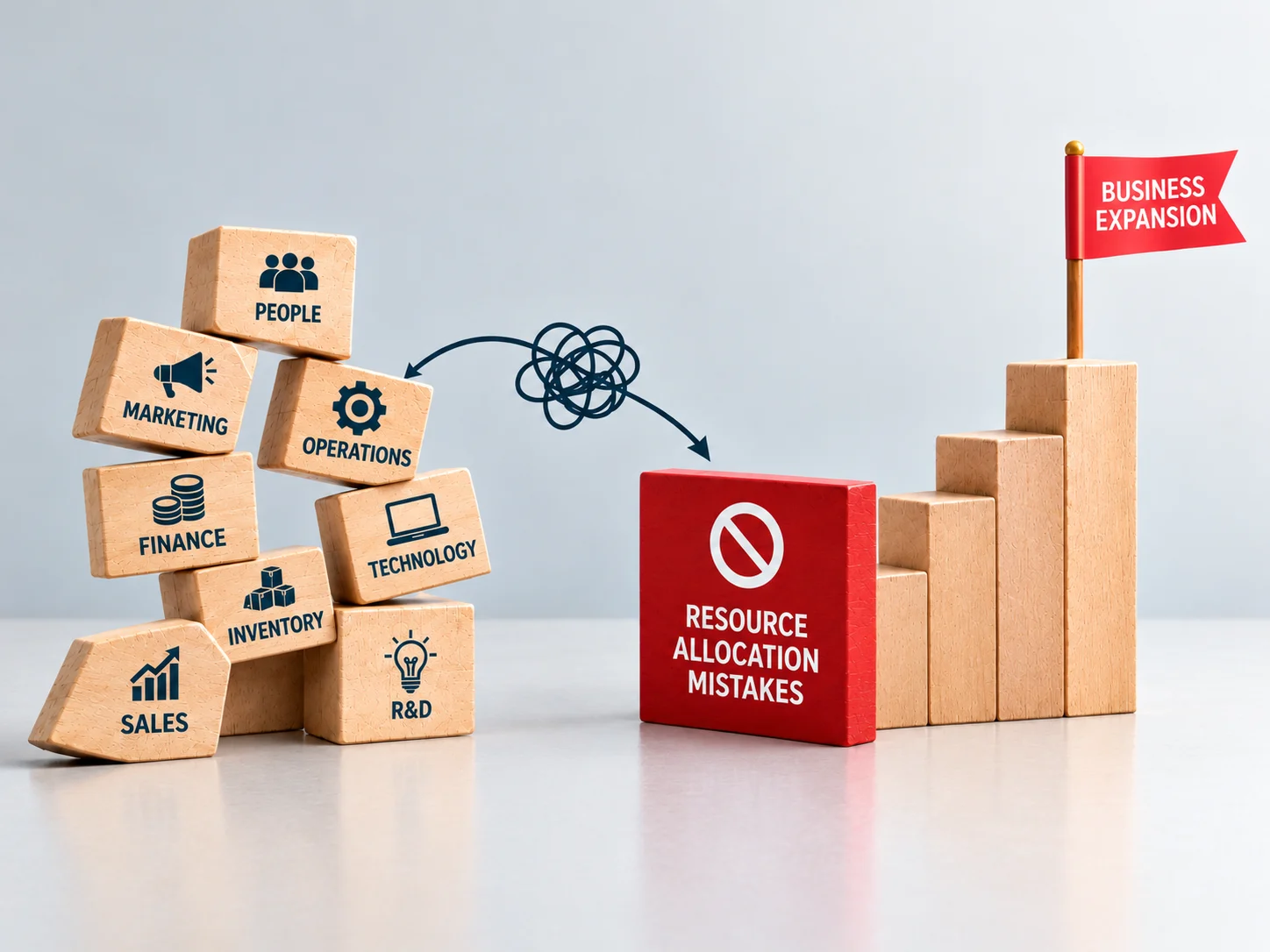
Most small businesses start with a founder who knows everything, does everything, and holds the whole operation in their head. That works fine when you have five employees and forty customers. It stops working the moment you have thirty employees, five departments, and customers who expect consistent service every single time.
At that stage, a few warning signs usually show up. The same task gets done differently depending on who’s doing it. New employees take far too long to become productive. Small mistakes turn into big customer complaints because there’s no defined process to catch them. The founder becomes a bottleneck because every decision routes back to them, and quality drops as the team grows instead of improving.
None of this is a “people problem”. It’s a systems problem. And the fix isn’t hiring more managers or working longer hours – it’s business process standardization: building repeatable, documented processes that don’t depend on any one person’s memory.
What Is Business Process Standardization, Really?
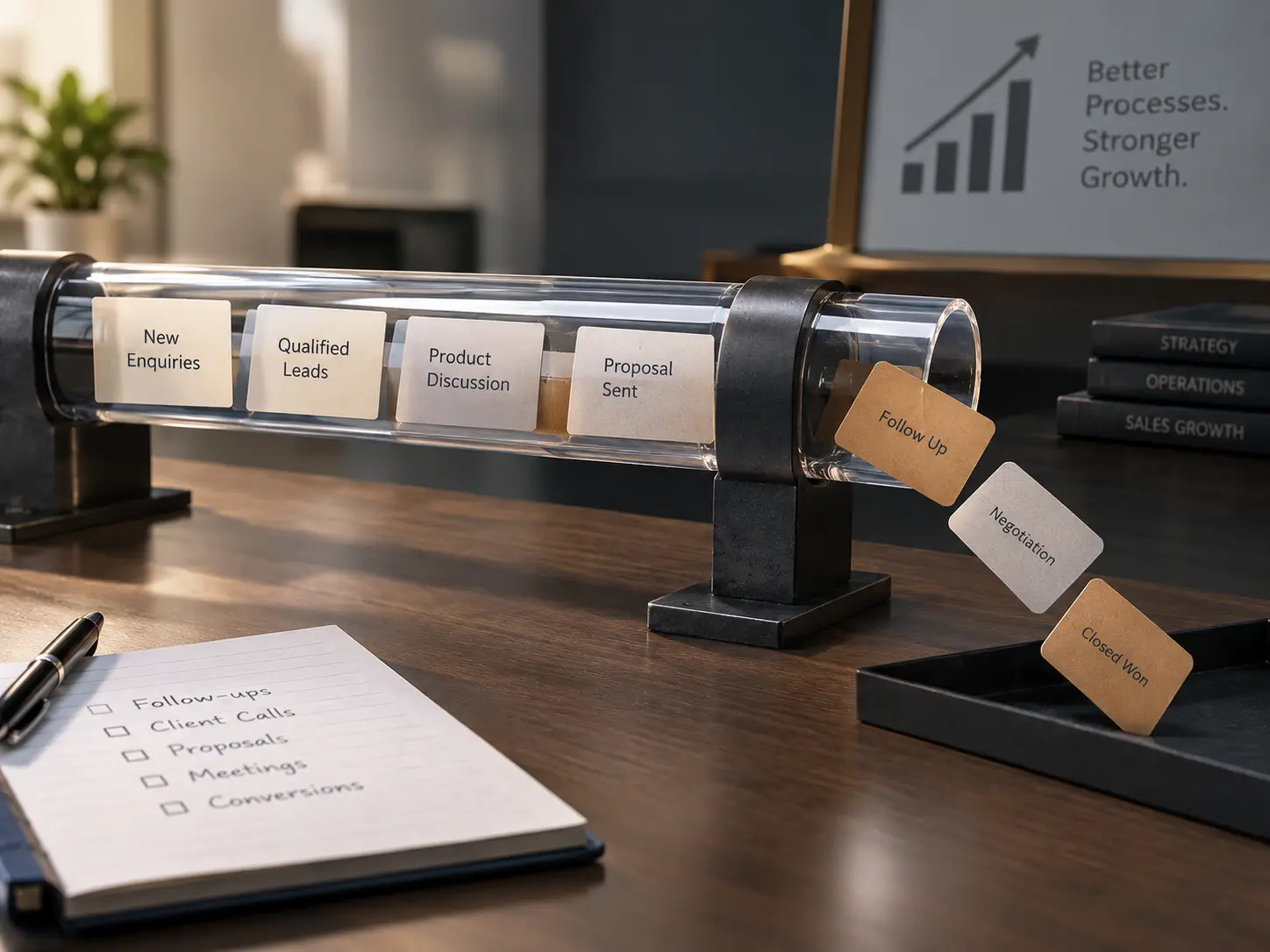
In simple terms, business process standardization means defining a single, consistent, documented way of doing a recurring task or workflow across your organization – and making sure everyone follows it. Instead of five customer service reps handling refund requests five different ways, there’s one clear process. Instead of onboarding depending on which manager happens to be free that week, there’s a checklist everyone follows.
This isn’t about turning your company into a rigid, robotic operation. It’s about removing the guesswork from the parts of your business that should behave the same way every time so your team can focus their creativity and judgment on the parts that actually need it.
Done well, business process standardization touches nearly every department: sales, customer support, finance, HR, and delivery. It’s less a one-time project and more a mindset shift in how the business operates day to day.
The Role of Business Process Management
Business process standardization doesn’t happen by accident – it’s the outcome of proper business process management. Process management is the ongoing discipline of identifying how work actually flows through your company, spotting where it breaks down, redesigning it to be efficient, and then monitoring it so it keeps working as the business changes.
Think of business process standardization as the “what” (a defined, repeatable way of doing something) and process management as the “how” (the ongoing system that creates, maintains, and improves those defined ways of working). SMEs that treat this as a continuous practice – rather than a one-off documentation exercise – tend to scale far more predictably, because their processes evolve alongside the business instead of quietly becoming outdated.
How to Create SOPs for a Growing Business
This is usually where founders get stuck. They know they need documentation, but they don’t know where to start. Here’s a practical way to approach it if you’re wondering how to create SOPs for a growing business without turning it into a months-long project.
Start with your highest-friction processes first, rather than trying to document everything at once. Pick the three or four workflows that cause the most confusion, delays, or errors – often onboarding, order fulfillment, or customer complaint handling – and begin there. From there, shadow the person currently doing the task, since the best SOPs come from watching how work actually gets done rather than guessing how it should be done. Sit with the employee, take notes, and capture every step, including the small judgment calls they make along the way.
Once you’ve captured the process, write it in plain, simple language that anyone could follow on their first day. Avoid jargon, use numbered steps and screenshots where useful, and include clear “if this happens, do that” instructions for common exceptions. Every SOP also needs an owner responsible for keeping it updated, because processes change over time, and documentation that nobody updates becomes useless within a few months. Finally, before rolling an SOP out company-wide, test it with someone new – hand it to someone unfamiliar with the task and watch where they get confused. Those gaps are exactly what you need to fix.
This is the foundation of good standard operating procedures for SMEs – not a giant manual nobody reads, but a living set of documents that your team actually uses, follows, and improves.
Operational Efficiency for SMEs: The Bigger Payoff
Once business process standardization is in place, something interesting happens: operational efficiency for SMEs stops being a buzzword and starts becoming measurable. Tasks get done faster because people aren’t reinventing the wheel every time. Errors drop because there’s a defined process to follow instead of relying on memory. Training time shrinks dramatically because new hires have something concrete to learn from.
There’s also a less obvious benefit – business process standardization makes your business easier to delegate. Founders who’ve documented their workflows can actually step back from day-to-day operations without everything grinding to a halt. That’s the real unlock: a business that can run (and grow) without the founder personally holding every process together in their head.
And from a purely financial angle, standardized operations are also more attractive to investors, lenders, and potential buyers because they signal a business that runs on systems rather than depends on one person’s presence.
Where Founders Usually Go Wrong
A few common mistakes tend to slow this whole process down. Many founders try to standardize everything at once, which overwhelms teams and stalls momentum, when prioritizing a handful of processes would work far better. Others write SOPs and then never revisit them, so the documentation quietly becomes outdated as the business evolves. It’s also common to treat documentation as a compliance exercise rather than a working tool – if nobody actually uses the SOP, it wasn’t worth writing in the first place. And perhaps the most overlooked mistake is not involving the team at all, since people tend to follow processes far more consistently when they’ve had a hand in shaping them.
Avoiding these pitfalls is often the difference between standardization that sticks and standardization that quietly dies in a folder nobody opens.
Standardization Is a Journey, Not a One-Time Fix
It’s worth setting expectations correctly: business process standardization isn’t something you finish and then forget about. As your business adds new products, new team members, or new markets, your processes need to evolve with it. A workflow that made sense for a ten-person team may need to be rebuilt entirely once you cross fifty. The businesses that stay efficient at every stage are the ones that build a strong team and even stronger processes, treating process improvement as an ongoing habit rather than a box to be ticked once and never revisited.
This is also why many SME founders eventually bring in outside support rather than trying to build everything internally while also running daily operations. An experienced pair of eyes can spot inefficiencies that are invisible to someone too close to the business and can help prioritize which processes matter most right now versus which can wait. Consultancies that focus specifically on operations – like Mountain Monk Consulting – exist precisely for this reason: to help founders separate “urgent” from “important” and build systems that actually hold up under growth.
Bringing It All Together
Growth is supposed to feel like progress, not chaos. If tribal knowledge, last-minute fixes, and a founder who can’t take a day off without something breaking currently hold your business together, business process standardization is the structural fix you actually need – not another hire, not another tool, but a clear, documented, repeatable way of working that scales with you.
This is exactly the kind of operations management that Mountain Monk Consulting specializes in – helping growing SMEs turn scattered, founder-dependent workflows into documented, scalable systems that hold up as the team expands.
Frequently Asked Questions
What is business process standardization in simple terms?
It means defining one consistent, documented way to perform a recurring business task so that everyone on the team follows the same steps, regardless of who’s doing the work.
Why do SMEs need standardized processes as they grow?
Because informal, undocumented ways of working that seemed fine with a small team start causing errors, delays, and inconsistency once the business adds more people, departments, and customers.
What’s the difference between an SOP and business process management?
An SOP is a specific document describing how to complete one task. Business process management is the broader, ongoing discipline of designing, monitoring, and improving all the workflows across a business, including the ones behind each SOP.
How long does it take to create SOPs for a growing business?
It depends on the number of processes involved, but most SMEs can document their highest-priority workflows within a few weeks by focusing on the most error-prone or time-consuming tasks first, rather than trying to cover everything at once.
Can small businesses really benefit from process standardization, or is it only for large companies?
Standardization is arguably more valuable for small and mid-sized businesses, since SMEs typically have fewer resources to absorb the cost of mistakes, rework, and confusion – the exact problems standardized processes prevent.
How do I know which processes to standardize first?
Start with whatever causes the most friction right now – the tasks with the highest error rates, the longest training time for new hires, or the most customer complaints. These usually offer the fastest, most visible improvement in operational efficiency for SMEs.
Ready to Bring Order to the Chaos?
If reading this felt a little too familiar, that’s usually a sign it’s time to act rather than wait for things to get worse. You don’t need to overhaul your entire company overnight – you just need a clear starting point and a system that actually gets used. Whether you’re staring down messy onboarding, inconsistent customer service, or a business that simply can’t run without you in the room, it’s worth having a real conversation about where standardization could make the biggest difference for your team.
The team at Mountain Monk Consulting works closely with SME founders to map out exactly this kind of operations management, one process at a time. Start the conversation with us, share what’s breaking down in your business right now, and let’s figure out the right place to start.