


Every Indian SME owner has faced that uneasy moment when sales look healthy on paper, yet the bank balance tells a different story. This gap between profitability and liquidity is one of the most common and most misunderstood challenges facing small and medium enterprises today. At the heart of this challenge lies cash flow management, the practice of tracking, planning, and controlling the movement of money in and out of a business. When it is neglected, even a fundamentally sound business can find itself unable to pay suppliers, meet payroll, or seize a timely growth opportunity.
At Mountain Monk Consulting, we see this pattern repeatedly across the Indian SME segment we work with, from ₹2 crore businesses just past their early scaling phase to ₹100 crore enterprises managing far more complex operations. For SME owners currently facing a cash shortage, understanding why this happens is the first step toward fixing it. Poor cash flow discipline rarely announces itself with a single dramatic event. Instead, it builds quietly through delayed receivables, unplanned expenses, and a lack of forward visibility until the business is forced into reactive decision-making. Weak cash flow management shows up first in Indian SMEs as missed vendor deadlines and last-minute borrowing, and understanding why cash flow forecasting matters more than most owners realize is what separates businesses that recover quickly from those that struggle for months.
Why Managing Cash Flow Is the Backbone of SME Survival
Profit and cash are not the same thing, and this distinction is where many SME owners run into trouble. A business can report a healthy profit margin on its income statement while simultaneously running out of usable cash because customers have not yet paid their invoices or because inventory is sitting unsold on shelves. This is precisely why cash flow management matters for a business of any size, but particularly for SMEs that operate with thinner reserves and less access to emergency credit than larger enterprises.
Cash flow management in business essentially answers one question at all times: does the company have enough liquid money to meet its obligations as they come due? When this question goes unanswered, or worse, unasked, owners find themselves making decisions under pressure rather than by design. A well-run operation treats cash flow as a living, breathing metric that owners review weekly, if not daily, not something they check only when a payment bounces or a vendor calls demanding dues.
The Immediate Effects of Poor Cash Flow Management
When cash flow management for small businesses is treated as an afterthought, the consequences tend to surface quickly and compound over time. The most visible impact is an inability to meet short-term obligations such as salaries, rent, and supplier payments. This creates a ripple effect where vendors begin demanding advance payments, employees lose confidence in the stability of the organization, and the business loses the goodwill it has spent years building.
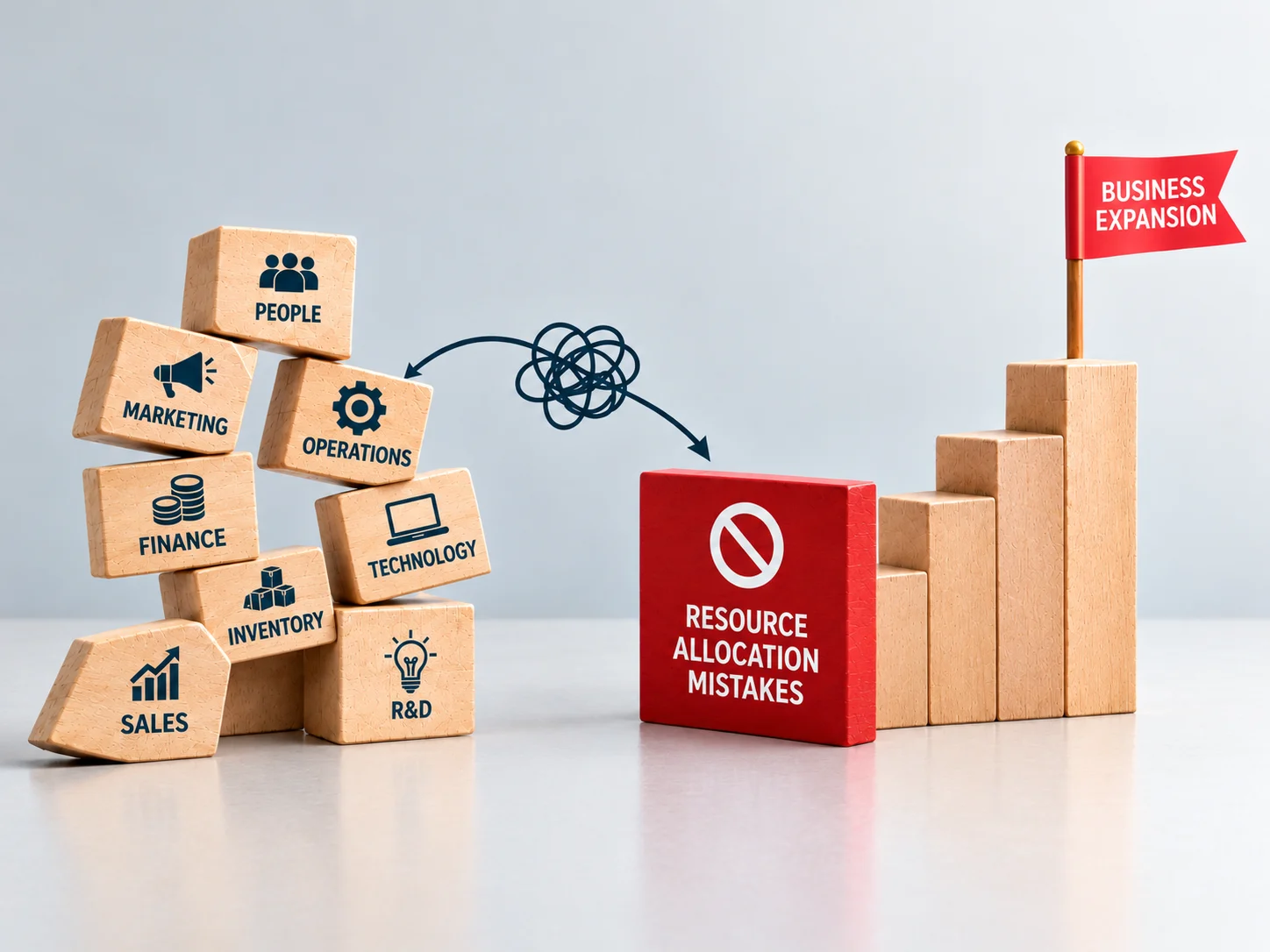
A second, less obvious effect is the erosion of growth opportunities. An SME with poor visibility into its cash position often cannot commit to a large order, invest in new equipment, or take advantage of a bulk-purchase discount, simply because it cannot predict whether it will still need the funds elsewhere in a few weeks. Growth, in this scenario, doesn’t face a block from a lack of demand or ambition but from a lack of financial discipline for SMEs that would otherwise allow the owner to plan with confidence.
Interest costs also tend to rise. Businesses caught off guard by cash shortages frequently turn to short-term borrowing, overdraft facilities, or informal lenders to bridge the gap. These sources of capital are typically more expensive than planned financing, and the recurring cost of servicing this debt further strains the very cash position that triggered the borrowing in the first place. Over several quarters, this cycle can quietly eat into margins that looked perfectly healthy on the income statement.
The Long-Term Effect of Cash Flow Management on Financial Performance
The long-term effect of weak cash flow discipline on financial performance extends well beyond the immediate ability to pay bills on time. Over a longer horizon, consistent cash flow discipline shapes how a business is perceived by banks, investors, and even its own employees. Lenders assess repayment capacity based on demonstrated cash flow patterns, not just profit figures, which means an SME with erratic cash flow will often face higher interest rates or stricter collateral requirements even if its underlying business model is sound.
Internally, weak cash flow management tends to distort decision-making. Owners under liquidity pressure often make choices driven by the need to generate immediate cash rather than by what is strategically best for the business. This might mean offering steep discounts to accelerate collections, delaying necessary maintenance or investment, or postponing hiring decisions that would otherwise support growth. Each of these choices, taken individually, might seem minor, but together they slow down the business’s long-term trajectory and put it at a disadvantage against competitors who operate with better financial visibility.
There is also a human cost that is easy to overlook. Founders and finance teams operating in a constant state of cash uncertainty spend a disproportionate amount of time firefighting rather than building. Strategic planning, market expansion, and process improvement all take a back seat when the immediate question every week is whether there is enough money to keep operations running smoothly.
The Role of Cash Flow Forecasting
If poor cash flow management is the disease, cash flow forecasting is one of the most effective preventive measures available to SME owners. Forecasting involves projecting inflows and outflows over a defined period, typically the next thirteen weeks for operational purposes and a full financial year for strategic planning, so that owners can identify shortfalls well before they become emergencies.
A reliable forecast does more than warn of trouble ahead. It also reveals patterns that owners might otherwise miss, such as seasonal dips in collections, recurring expense spikes tied to specific months, or customers who consistently pay later than agreed terms. Once these patterns are visible, an SME can negotiate better payment terms with suppliers, tighten credit policies with slow-paying customers, or build a cash buffer specifically timed to cover known lean periods.
Many Indian SMEs still rely on informal, memory-based tracking of cash positions rather than structured forecasting tools. This works reasonably well when the business is small and transactions are few, but it breaks down quickly as the business scales and the number of moving parts increases. Introducing even a basic weekly forecasting discipline, built in a simple spreadsheet or a dedicated tool, is often enough to shift a business from reactive firefighting to proactive planning within a matter of months.
Building Financial Discipline for SMEs Through Better Operations
Financial discipline for SMEs is not a one-time fix but an operational habit that needs to be embedded into how the business runs day to day. This starts with separating cash flow monitoring from general bookkeeping. While bookkeeping records what has happened, cash flow management is forward-looking and answers what is likely to happen in the coming weeks and months.
Practical steps that tend to make the biggest difference include tightening receivables management so that the team follows up on invoices consistently rather than leaving them to chance, renegotiating payment terms with key suppliers to better match the business’s own collection cycle, and maintaining a cash reserve equivalent to at least one to two months of operating expenses wherever possible. None of these steps require sophisticated technology or large investment. What they require is consistency and a clear operational process that the entire team understands and follows.
This is also where an outside perspective often proves valuable. Business owners who devote themselves deeply to daily operations sometimes struggle to step back and see cash flow patterns objectively, especially when the business has grown organically without formal financial processes in place. A structured operations management, of the kind Mountain Monk Consulting conducts for SMEs across the ₹2 crore to ₹100 crore revenue range, can identify exactly where the cycle stalls cash and what specific process changes will free it up.
Turning Cash Flow Discipline Into a Competitive Advantage
SMEs that master their cash flow gain something that goes beyond simply avoiding a crisis. They gain the ability to move quickly when opportunities appear, whether that means accepting a large order with confidence, investing in a new machine ahead of a competitor, or expanding into a new city without financial anxiety holding back the decision. This kind of agility is one of the genuine advantages small and mid-sized businesses have over larger, slower-moving competitors, but only if the underlying cash position is understood and managed with discipline.
For SME owners currently facing a cash shortage, the path forward starts with visibility. Once managing cash flow becomes a regular, structured practice rather than an occasional worry, most of the downstream problems, from strained supplier relationships to missed growth opportunities, begin to resolve on their own. The businesses that treat this as a core operational priority, rather than a finance department afterthought, are consistently the ones that navigate uncertain periods with the least disruption.
Frequently Asked Questions
1. Why is cash flow management important for a business?
Cash flow management ensures a business has enough liquid funds to meet its day-to-day obligations, even when profits look strong on paper. Without it, a profitable SME can still face payment defaults, strained supplier relationships, and missed growth opportunities.
2. What is the difference between profit and cash flow?
Profit reflects revenue minus expenses over a period, while cash flow reflects the actual money moving in and out of the business at any given time. A business can be profitable and still run out of cash if receivables are delayed or expenses are front-loaded.
3. How does cash flow forecasting help small businesses?
Cash flow forecasting projects future inflows and outflows so owners can spot potential shortfalls weeks or months in advance. This allows time to adjust collections, negotiate supplier terms, or arrange financing before a crisis develops.
4. What are the early warning signs of poor cash flow discipline?
Common signs include repeatedly delaying supplier payments, relying on short-term borrowing to cover routine expenses, difficulty predicting the cash position beyond a few days, and declining an order or opportunity purely due to funding uncertainty.
5. How can an SME improve its cash flow discipline without major investment?
Tightening invoice follow-ups, renegotiating payment terms with suppliers, building a modest cash reserve, and adopting a simple weekly forecasting habit can meaningfully improve cash flow discipline without requiring new technology or significant capital outlay. Mountain Monk Consulting typically starts SME engagements with exactly this kind of low-cost operational audit before recommending any larger process overhaul.
If cash flow visibility has been a recurring struggle in your business, it usually points to a deeper operational gap rather than a one-off financial hiccup. Mountain Monk Consulting works with Indian SME owners to diagnose exactly where the cycle stalls cash and to build the operational discipline that fixes it for good. A conversation about your specific cash flow challenges could be the first step toward a more predictable, growth-ready business.