

Let’s be honest for a second. When was the last time an annual review actually changed how someone on your team worked?
If you had to stop and think, you’re not alone. Most growing teams don’t have a performance problem. They have a feedback timing problem. A target missed in March gets discussed in December, long after anyone can fix it.
HR teams know this pain well. Forms get filled. Ratings get assigned. Increments get announced. And yet, the next quarter looks exactly like the last one.
So what’s going wrong? In most companies, employee performance management is treated as a yearly event instead of an everyday habit. In this guide, we’ll show you how to change that. You’ll see what continuous performance looks like, why it matters for SMEs, and how founders and HR leaders can build it step by step, without burying managers in paperwork.
What Is Continuous Employee Performance Management?
Continuous employee performance management is an ongoing cycle of goal-setting, regular check-ins, real-time feedback, and quick course correction. Instead of relying on one big annual appraisal, it spreads performance conversations across the whole year.
The formal review doesn’t disappear. It simply becomes a summary of conversations that have already happened.
Here’s an easy way to picture it. A yearly health check-up is useful, right? But it’s your weekly workouts that actually change the result. Short monthly check-ins work the same way. They do far more for performance than one long, tense meeting at year-end.
A continuous model runs on three simple habits. The first is clear, shared goals, where every employee can explain their top priority in one sentence and see how it links to business goals. The second is quick, regular check-ins of 15 to 30 minutes, focused on progress, blockers, and support rather than judgement.
The third habit is two-way feedback. Managers coach in the moment, and employees feel safe raising problems early, before they turn into bigger issues.
Once these habits become routine, the annual review stops being a surprise. It just confirms what both sides already know.
Why the Performance Review Process for SMEs Often Breaks Down
Here’s the thing. The annual appraisal was built for large, stable companies where roles barely changed from year to year. Growing companies are the exact opposite.
Priorities shift every quarter. People wear multiple hats. A role defined in January can look completely different by June.
That’s why a copy-pasted corporate template rarely works as a performance review process for SMEs. Does any of this sound familiar?
The first problem is recency bias, which simply means managers remember the last six weeks clearly and the first ten months vaguely, so ratings reflect recent memory instead of real contribution. Goals also go stale, because targets set in January no longer match what the business needs, yet people are still judged against them.
Then there’s money. When the review is only about the increment, nobody talks honestly about skills or growth. On top of that, managers in smaller teams are often promoted top performers rather than trained people leaders, so they’ve never really learned how to coach.
And finally, nothing happens afterwards. The form is submitted, filed, and forgotten until the next cycle.
So if your HR team keeps tweaking rating scales but results stay flat, the template probably isn’t the real issue. The real issue is that employee performance management happens once a year, when it needs to happen all year.
KPI-Driven Performance Management: Measure What Actually Matters
KPI-driven performance management links each person’s goals to a few measurable indicators tied to real business outcomes. When it’s done well, reviews stop being about opinions. Both manager and employee can see progress in clear numbers.
When it’s done badly, though? It turns into a spreadsheet nobody trusts. The difference usually comes down to four simple rules.
Start by keeping it to three to five KPIs per role. Any more, and people lose focus. A sales executive, for example, might track qualified pipeline, conversion rate, and customer retention, not fifteen different metrics.
Next, mix outcome and behaviour measures. Revenue tells you what happened, while behaviour indicators like collaboration or quality of work tell you how it happened. Good employee performance management needs both.
It also helps to revisit KPIs every quarter. In a growing business, last quarter’s KPI might no longer matter, so review them openly during check-ins and adjust as needed.
Finally, make the data visible. When employees can see their own numbers, check-ins turn into joint problem-solving, and nobody feels caught off guard by a surprise score.
Remember, KPIs aren’t there to police people. They give everyone an honest picture of where things stand, and that’s the foundation of fair employee performance management.
How Founders Can Make Performance Reviews Actually Work
Wondering how founders can make performance reviews actually work? The honest answer is simple. Culture follows what the founder does, not what the HR policy says.
If the founder skips check-ins or only talks about performance when something breaks, the whole company learns to do the same. But when the founder shows up consistently, everyone else follows.
So what can founders start doing this month? The first step is to model the habit yourself. Hold regular one-on-ones with your leadership team and talk openly about your own goals and misses. When the founder takes feedback well, others feel safe doing the same.
Next, separate growth talks from pay talks. Keep check-ins focused on progress and development, and discuss compensation in a separate, clearly scheduled meeting. This keeps the salary talk from taking over honest feedback.
Founders also need to give managers real time for coaching. Nobody can coach eight people while carrying a full personal target, so protect time for check-ins and invest in basic coaching skills. And lastly, reward improvement, not just results. Celebrating someone who turned a weak quarter around shows the whole team that the system exists to help people grow.
In short, when founders treat employee performance management as a daily leadership job rather than an HR deadline, reviews finally start creating real change.
Employee Performance Management for Growing Indian SMEs
Employee performance management for growing Indian SMEs comes with its own challenges. Have you noticed any of these in your company?
Many businesses are family-run or founder-led, so key decisions sit with a few people. Teams often grow fast, sometimes from 20 to 200 people in just a few years. Hierarchy can stop juniors from speaking up in front of seniors, and appraisal season is so closely tied to annual increments that reviews feel more like salary events than growth conversations.
None of this makes continuous performance impossible. It just means the approach needs to fit the way your company works. Structured check-in formats work well here because they give employees a respectful, safe way to raise concerns without feeling they’re challenging a senior.
It also pays to start with simple tools. A shared sheet or a basic HRMS module is often enough, and expensive software rarely fixes a habit problem. Writing goals in plain language, or even bilingually, helps frontline and plant teams understand expectations as clearly as office teams. Most importantly, show clear links between individual KPIs and company growth, so people see why their role matters beyond the yearly hike.
At Mountain Monk Consulting, we’ve seen the biggest gains come from clarifying roles, simplifying goals and training first-time managers, not from buying new software.
A 6-Step Framework to Build a Continuous Performance Culture
Good news: you don’t need to change everything overnight. Most teams make the shift gradually over two or three quarters, and this six-step roadmap keeps it practical.
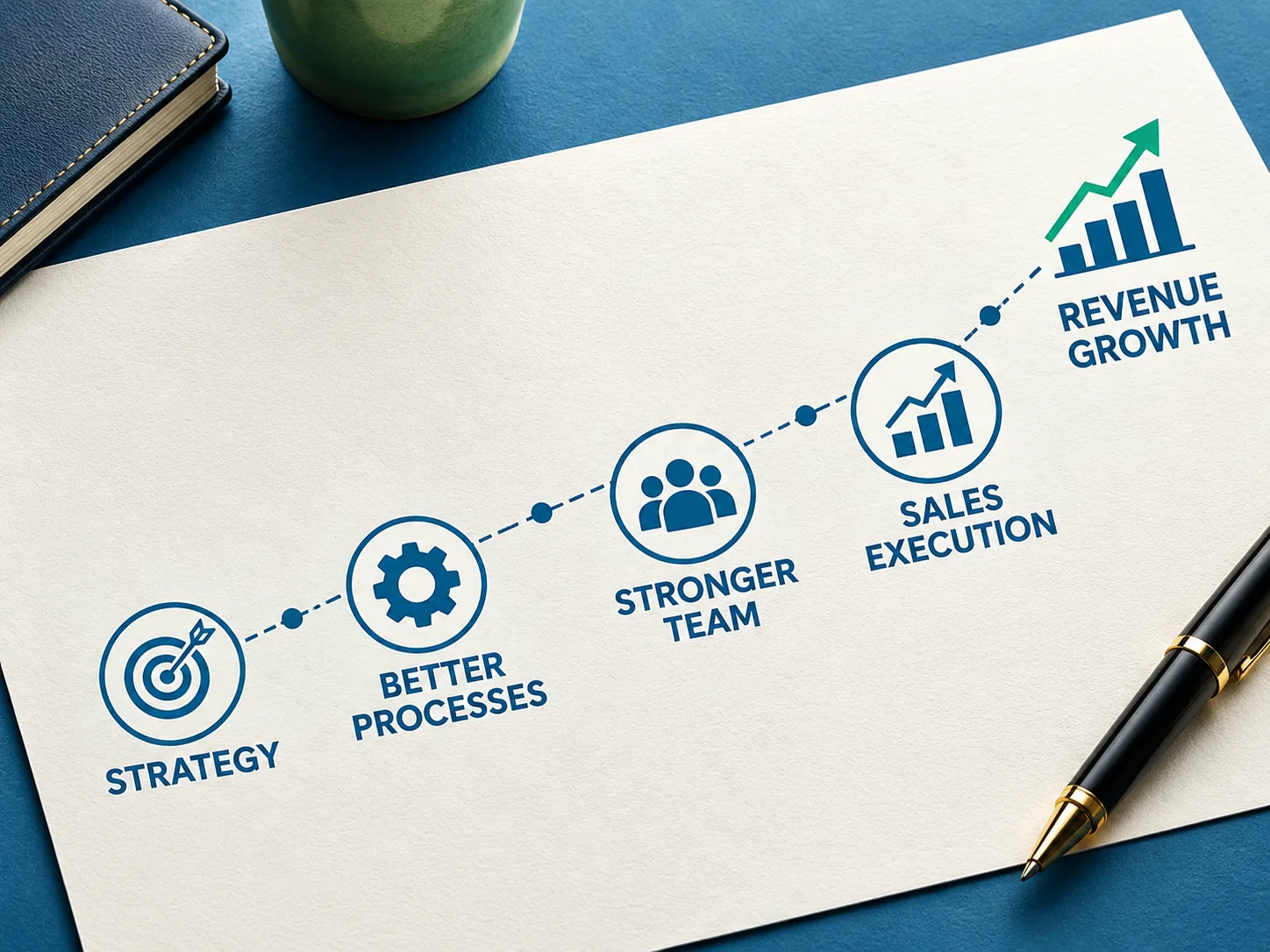
Step one is to clarify roles and outcomes. Give every role a clear purpose and three to five key outcomes, because unclear roles cause the most unfair reviews. Step two is to set quarterly goals linked to KPIs, breaking annual priorities into smaller goals that stay relevant and measurable.
Step three is to schedule regular check-ins. Put monthly or fortnightly one-on-ones on every manager’s calendar and keep a simple agenda covering progress, blockers, support needed, and one growth point. Step four is to train managers to give feedback. Even a two-hour workshop on specific, behaviour-based feedback can change conversations across the company.
Step five is to run a lighter year-end review. Since the year is already documented through check-ins, the final review becomes a summary and a plan rather than a scary verdict. Step six is to measure the system itself by tracking check-in completion, goal achievement, and employee feedback on the process. If it isn’t working, adjust it.
Our tip? Start with one department as a pilot. Learn what works, fix what doesn’t, then roll out your new employee performance management approach with real internal success stories to share.
The Role of HR Management for Growing Businesses
In a continuous model, HR stops being the team that chases forms. Instead, it becomes the team that designs the system and builds manager capability. That shift sits at the heart of effective HR management for growing businesses.
So who does what? HR owns the framework, the calendar, and the training. Managers own the conversations. HR also acts as a quality check, spotting teams where check-ins aren’t happening and stepping in with support, not policing.
This is exactly where Mountain Monk Consulting’s People & Organisation Performance practice helps. We work with HR teams to redesign roles, build KPI frameworks people actually believe in and train managers to run check-ins that make a real difference. The goal is a system your team can run on its own.
Tired of running reviews that don’t change anything? A fresh outside view can quickly spot the few changes that matter most. That’s why Mountain Monk Consulting usually starts with a quick review of your current employee performance management process before recommending anything new.
Ready to Make Your Reviews Actually Improve Performance?
If your team puts real effort into reviews but sees little change, it’s probably time to rethink the system, not the form. Continuous employee performance management isn’t about more meetings. It’s about the right conversations, at the right time, around goals people truly understand.
Want a second pair of eyes on your current process? Talk to the People & Organisation Performance team at Mountain Monk Consulting. We’ll walk through how your reviews run today, where they’re losing impact, and what a practical, continuous model could look like for your growing team.
Frequently Asked Questions
What is employee performance management?
Employee performance management is the process of setting clear goals, tracking progress, giving regular feedback, and helping employees improve. In growing companies, it works best as an ongoing cycle rather than a single annual appraisal.
How often should managers hold performance check-ins?
Monthly one-on-ones work well for most growing teams. For new joiners or fast-changing roles, fortnightly check-ins are better. Short, consistent conversations matter more than long, occasional ones.
Do we still need annual reviews if we have regular check-ins?
Yes, but they become lighter and more useful. The annual review summarises the year’s check-ins, confirms ratings, and sets direction for next year. Nobody walks in expecting a surprise.
What is the best performance review process for SMEs?
The best performance review process for SMEs is simple, quarterly, and KPI-linked. It combines three to five clear goals per role, regular manager check-ins, and a short year-end summary, without heavy forms or complicated rating scales.
How many KPIs should each employee have?
Three to five KPIs per role is ideal. This keeps people focused on what truly drives results and makes check-ins clearer for everyone.
Why don’t performance reviews improve performance?
Most reviews fail because feedback comes too late, goals are outdated, managers aren’t trained to coach, and nothing is followed up afterwards. Moving to regular check-ins solves most of these problems.