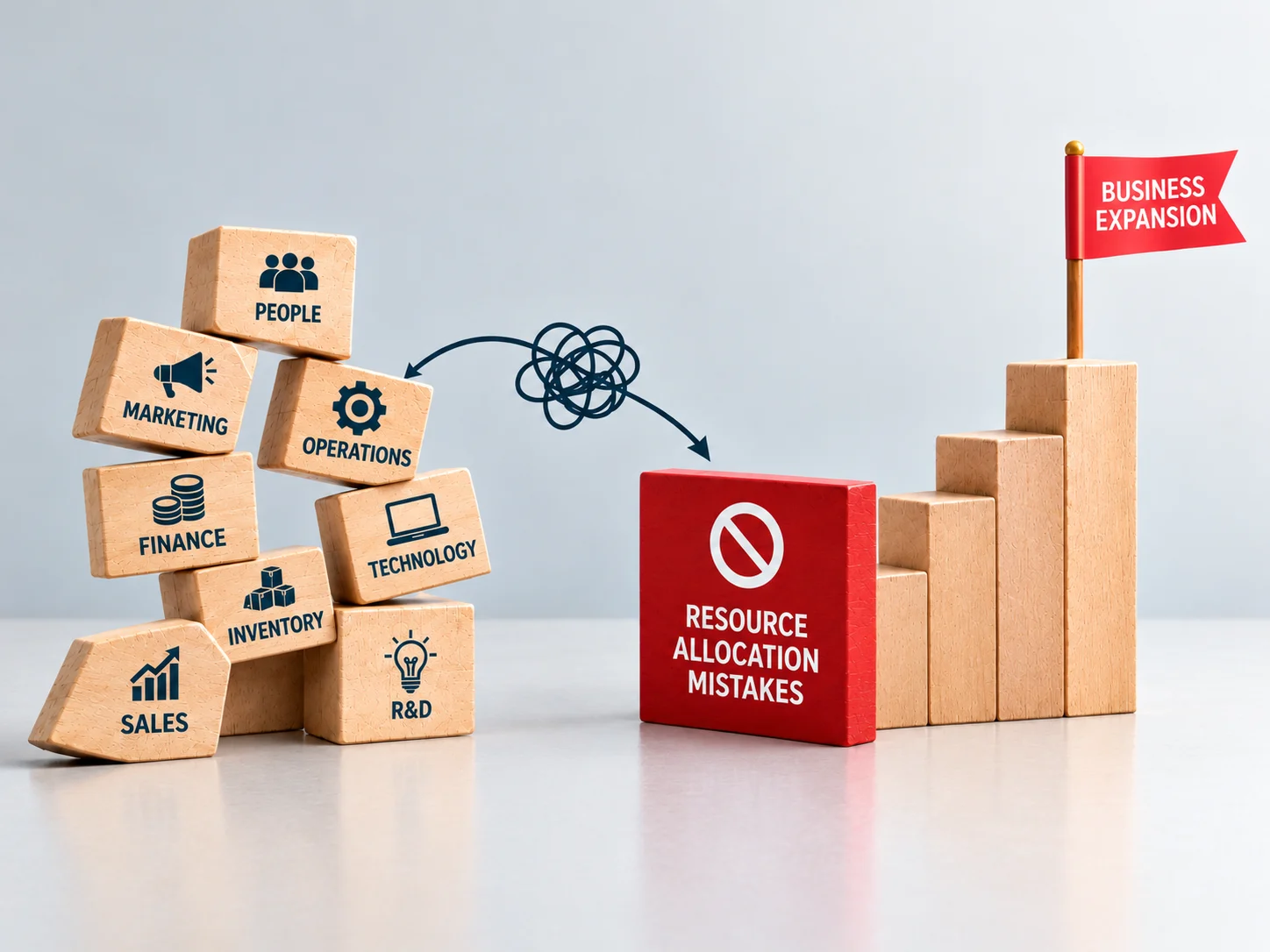



Sales are up, the order book looks healthy, and yet the bank balance tells a different story. This is one of the most frustrating experiences for Indian SME owners and founders – growth on paper that never quite translates into growth in profit. In most cases, the culprit is not a single dramatic failure but something far quieter and harder to spot: revenue leakage.
This phenomenon refers to the gradual, often invisible loss of income that a business rightfully earns but never actually collects. It is not fraud in the classic sense, and it rarely shows up as one big number on a financial statement. Instead, it hides in the gaps between departments – in pricing errors, unbilled services, discounts that teams still honour after they expire, contract terms nobody tracks, and manual processes that quietly drop transactions. For a business turning over two crore or twenty crore rupees a year, even a two to three percent leakage rate can drain lakhs of rupees every quarter without raising a single red flag.
Why Growing Sales Doesn’t Always Mean Growing Profit
Most SME owners track top-line revenue closely – inquiries, conversions, order value, monthly sales. Far fewer track what happens to that revenue after the sale is made. This gap is exactly where profit leakage tends to occur. A distributor may be shipping products correctly but under-invoicing due to an outdated price list. A services firm may be delivering extra scope to clients without updating the contract or raising a change order. A retail chain may be issuing discounts at the counter weeks after the scheme expired.
None of these situations involve dishonesty. They involve process gaps, disconnected systems, and a lack of structured oversight – the kind of operational blind spot that a formal, structured risk assessment catches before it compounds into a much larger problem.
Common Sources of Revenue Leakage in Indian SMEs
In our work with SME clients, Mountain Monk Consulting rarely finds it coming from one source. Leakage usually builds up across several small, disconnected weak points in the business.
Pricing inconsistency is one of the most common. When price lists are updated in one system but not communicated to the sales or billing team, transactions get processed at outdated rates. Over hundreds of invoices a month, this difference adds up quickly and is almost impossible to catch without a dedicated review.
Billing and invoicing gaps are another major contributor. Services delivered but never formally billed, delayed invoicing that leads to disputes and write-offs, or incomplete invoices that miss taxes, freight, or add-on charges all fall into this category. In businesses that still rely heavily on manual invoicing or fragmented spreadsheets, this is often the single largest source of leakage.
Discount and rebate mismanagement is particularly common in distribution and retail-driven businesses. Promotional discounts that teams keep applying after a scheme ends, sales staff extending informal discretionary discounts, or rebate structures that nobody properly closes out all quietly erode margin.
Contract and scope creep affect service-based SMEs the most. When a client requests additional work outside the original agreement and the team delivers it without a formal amendment, the business absorbs the cost without ever recovering the corresponding revenue.
Operational inefficiencies, such as inventory shrinkage, unbilled returns, or manual data entry errors between the sales, billing, and accounting systems, round out the list. Individually, each of these feels minor. Collectively, they are often the difference between a business that scales profitably and one that grows in size but not in margin.
How to Identify Revenue Leakage in a Business
Identifying it requires looking beyond the profit and loss statement and into the operational processes that generate revenue in the first place. A useful starting point is comparing what was quoted, contracted, or agreed upon against what was actually invoiced and collected. Any consistent gap between these numbers, even a small one, is worth investigating further.
Reviewing discount and rebate reports against the original approval terms is another practical step. If discounts are being applied that do not match any current, approved scheme, that is a direct signal of leakage. Similarly, tracking the time gap between service delivery or dispatch and invoice generation can reveal delayed or missed billing cycles that are quietly costing the business.
For SMEs with sales teams operating with some pricing discretion, cross-checking a sample of invoices against the approved price list often reveals a lot on its own. Founders frequently find how much variation exists between what the price list required and what staff actually charged, even when every individual transaction looks reasonable in isolation.
The most reliable way to identify these gaps consistently, rather than stumbling on them occasionally, is through a structured revenue leakage audit rather than ad hoc checks whenever something feels off.
The Role of a Revenue Leakage Audit and Analysis
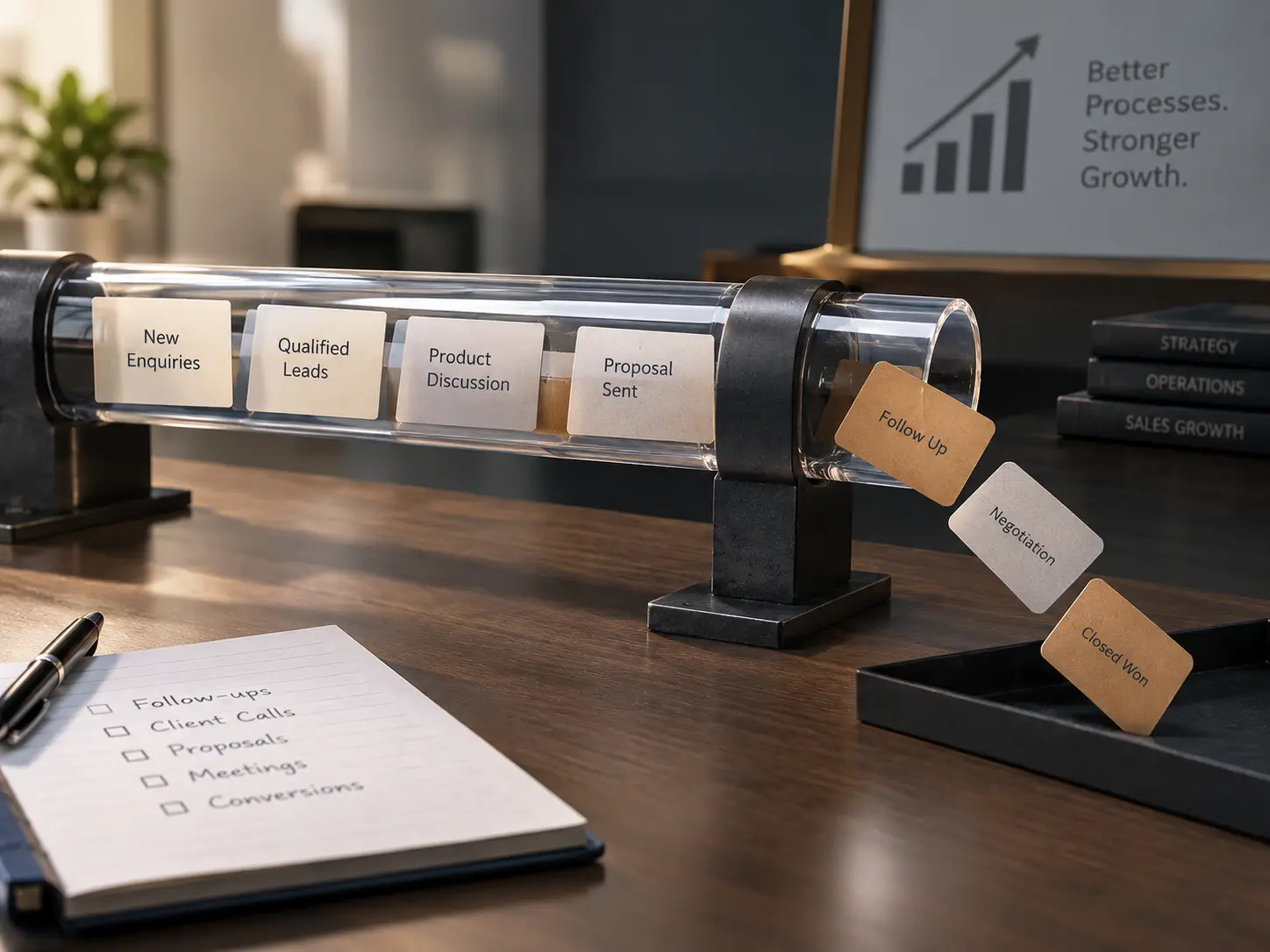
As a business consulting firm, Mountain Monk Consulting typically starts this process as a systematic review of the entire revenue cycle – from quotation and order booking through to delivery, invoicing, collection, and reconciliation.
This is typically followed by a revenue leakage analysis, where the findings are quantified. Instead of a vague sense that “something is off with margins”, the business gets a clear picture: which product lines, which client segments, or which internal processes are responsible for the largest share of leakage and what the estimated annual impact looks like in rupee terms. This distinction matters because it shifts the conversation from guesswork to a prioritised, evidence-based action plan.
For most SMEs, this kind of analysis also uncovers a secondary insight that is just as valuable as the margin erosion itself: which processes are most exposed to human error or manual dependency, and where basic controls are missing entirely. That insight feeds directly into a broader operational risk review, helping founders address not just the symptom but the underlying process weakness.
Revenue Leakage Prevention Strategies
Fixing this is rarely about a single corrective action. It requires a combination of process discipline, system controls, and periodic review built into how the business operates.
Standardising pricing and discount approval workflows is usually the first and highest-impact step. When every discount above a defined threshold requires a documented approval, informal or expired discounting becomes far harder to slip through unnoticed. Tightening the link between delivery and billing is equally important – service completion or dispatch should automatically trigger an invoicing checkpoint rather than depending on someone remembering to raise the bill.
Contract governance also plays a significant role, particularly for service-based businesses. Any change in scope, timeline, or deliverables should route through a simple change-order process, however lightweight, so that additional work is always linked to additional billing. Periodic reconciliation between sales orders, delivery records, and invoices, even on a monthly basis, catches discrepancies while they are still small and easy to correct.
Finally, treating margin protection as an ongoing discipline rather than a one-time fix makes the biggest long-term difference. A quarterly or half-yearly internal review, even a brief one, keeps new gaps from quietly re-forming as the business scales, adds new product lines, or onboards new team members.
Why SMEs Need a Structured View of Operational Risk
This leakage is ultimately a symptom of a broader issue: operational risks that nobody has formally mapped. Most SME owners focus deeply on growth, sales, and day-to-day operations, which leaves little bandwidth to step back and systematically examine where the business stands exposed. This is precisely the gap that a structured, ground-up risk assessment closes.
At Mountain Monk Consulting, we approach this through a comprehensive, data-driven assessment that looks across a business’s operations, finance, people, and processes to surface exactly these kinds of hidden risks. Tools such as the MMC Quantics assessment give founders a clear, nine-dimensional view of where their business stands, including areas like revenue integrity that businesses rarely examine until the damage has already accumulated. For SMEs in the two to twenty crore range, and increasingly for those scaling towards the twenty to hundred crore mark, this kind of early, structured visibility is often what separates businesses that protect their margins through growth from those that quietly lose them.
It will not announce itself. It shows up as a slightly lower margin than expected, a slightly higher cost of doing business, and a nagging sense that the numbers should look better than they do. The businesses that catch it early are almost always the ones that made the decision to look for it systematically, rather than waiting for it to become impossible to ignore.
Frequently Asked Questions
1. What is revenue leakage in simple terms?
It refers to the loss of income a business has earned but fails to invoice, collect, or record correctly, usually due to process gaps rather than intentional wrongdoing.
2. How is revenue leakage different from cash flow problems?
Cash flow issues are about timing – money coming in later than expected. This kind of loss is about money that is never billed or collected at all, so it never enters the cash flow cycle in the first place.
3. How much can revenue leakage cost an SME?
It varies by industry and process maturity, but even a leakage rate of two to three percent of annual revenue can amount to a significant, avoidable loss for a business in the crore-plus turnover range.
4. How often should a business conduct a revenue leakage audit?
An annual audit is a reasonable baseline for most SMEs, though businesses with complex pricing, multiple product lines, or frequent contract changes benefit from a half-yearly review.
5. Can revenue leakage be fully eliminated?
Tighter process controls and regular reconciliation can substantially reduce it, but some residual risk always exists. The goal is to catch and correct leakage quickly, not to assume you can eliminate it entirely.
Ready to Find Out What Your Business Is Losing?
If your sales numbers keep climbing but your margins tell a different story, the gap is worth investigating before it becomes a habit. Mountain Monk Consulting’s structured approach to uncovering operational and financial risk, backed by the MMC Quantics assessment, gives founders a clear view of exactly where revenue is slipping through the cracks – and what to do about it. A conversation with our team is the simplest way to find out where your business stands.