


Let me start with something uncomfortable.
Most FMCG founders don’t have a growth problem.
They have a sustainable growth problem.
Sales are happening. Distributors are active. Products are moving.
But growth feels… heavy.
Not exciting. Not freeing. Heavy.
If you’ve ever ended a financial year with higher revenue but higher stress, you already know what I mean.
And that’s where most conversations around FMCG business growth strategies go wrong.
Because what works in theory doesn’t always work in the market without structured business growth planning.
The Reality Behind “Let’s Grow This Year”
Every year starts the same way.
New targets.
New territories.
More distributors.
Maybe a rebranding.
Definitely more pressure.
On paper, it looks like a plan.
But inside the business, nothing fundamental has changed.
The same operational gaps.
The same dependency on the founder.
The same cash flow tightness.
The same firefighting.
And by Q3, growth becomes survival.
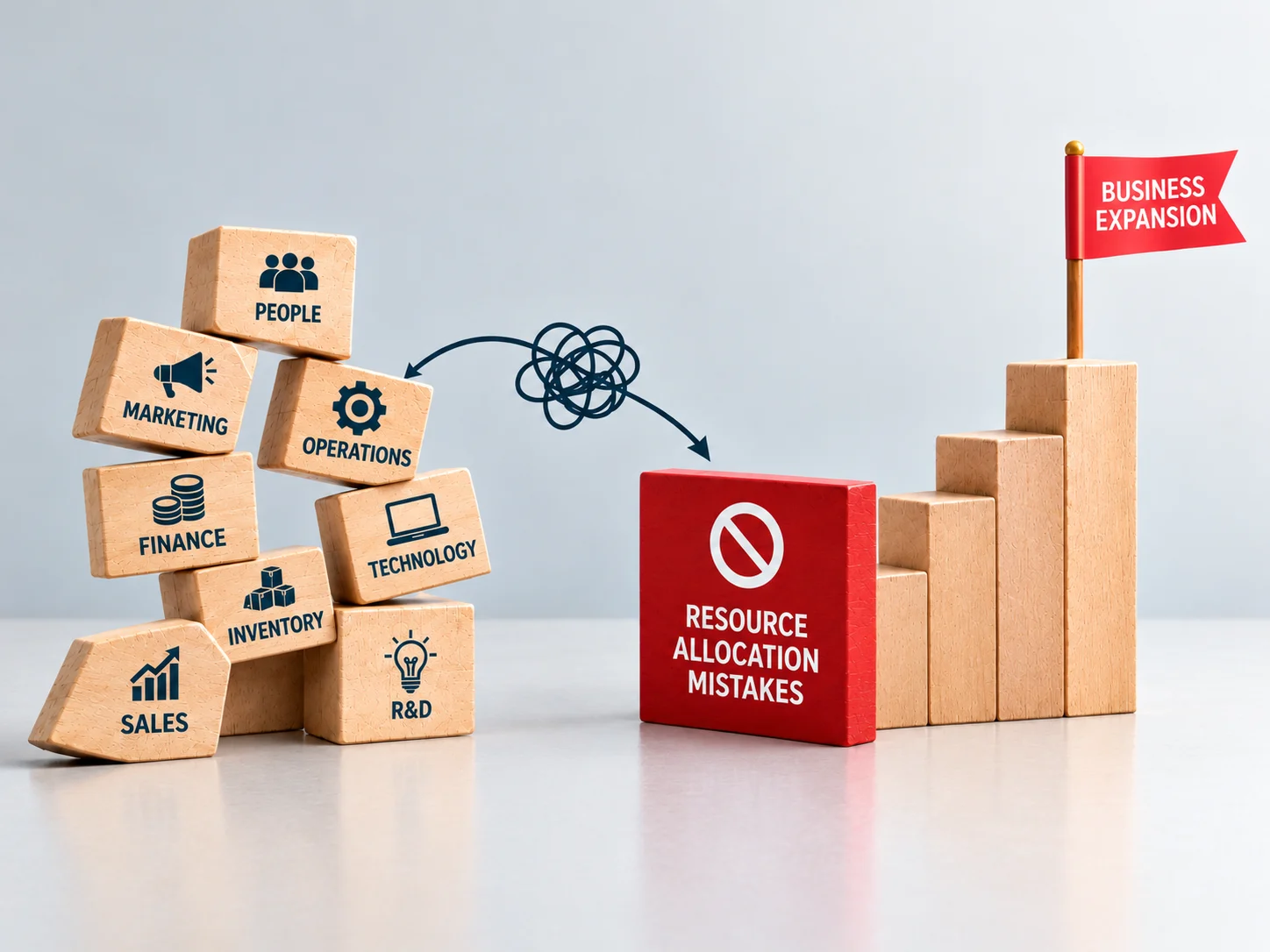
This is one of the biggest FMCG growth challenges, we try to grow without strengthening.
Strategy 1 That Doesn’t Work: “Just Push More Sales”
Let’s be honest.
The most common FMCG growth strategy is simple: “Increase targets.”
So the sales team pushes harder.
Schemes increase.
Credit expands.
Volume rises.
For a while, it looks like momentum.
But then:
- Margins dip
- Collections slow
- Inventory piles up
- Cash flow tightens
You grow, but you don’t gain.
This is one of the most repeated FMCG business growth problems, confusing volume with value.
Strategy 2 That Doesn’t Work: “Add More SKUs”
When growth slows, many founders launch new products.
New flavors.
New packaging.
New price points.
The logic is simple: more products = more sales.
But what usually happens?
More complexity.
More inventory.
More forecasting errors.
More working capital.
Rarely more profit.
This is one of the silent growth issues in FMCG SMEs expansion without focus.
Strategy 3 That Doesn’t Work: “Enter More States”
Geographic expansion feels powerful.
New city launches.
New distributor appointments.
Bigger map coverage.
But scaling FMCG business geographically multiplies operational strain:
- Logistics cost increases
- Market supervision weakens
- Brand control reduces
- Cash cycles stretch
If the home market is not fully optimized, new markets don’t fix the problem, they replicate it.
That’s why many founders experience FMCG scaling challenges right after expansion.
Growth reveals cracks.
So What Actually Works?
Here’s something I’ve observed after watching multiple FMCG SMEs grow from ₹20 crore to ₹100+ crore.
The ones who scale calmly don’t chase growth.
They design it. And design looks very different from hustle.
1. They Fix Profitability Before Volume
They deeply understand:
- Which SKUs drive margin
- Which channels leak profit
- Which schemes actually convert
They don’t blindly increase sales.
They increase contribution. That changes everything.
2. They Build Systems Before Speed
Before increasing targets, they ask:
- Is our supply chain stable?
- Are collections predictable?
- Does every manager know their number?
- Is reporting real-time or reactive?
Because without systems, growth depends on energy.
And energy runs out.
3. They Reduce Founder Dependency
Here’s a hard truth.
If every big decision still requires you, scaling will feel suffocating.
Successful FMCG growth strategies shift the founder from operator to architect.
You stop solving daily friction. You start designing clarity.
And that shift alone removes enormous pressure.
4. They Control Complexity Ruthlessly
Growing FMCG SMEs often become unnecessarily complex.
Too many SKUs.
Too many pricing layers.
Too many exceptions.
The businesses that grow sustainably simplify:
- Fewer high-performing SKUs
- Clear pricing discipline
- Defined expansion logic
Simplicity scales faster than chaos.
5. They Align Strategy With Implementation
This is where most plans collapse.
Strategy is discussed. Targets are set. But implementation is left to chance.
Real growth happens when:
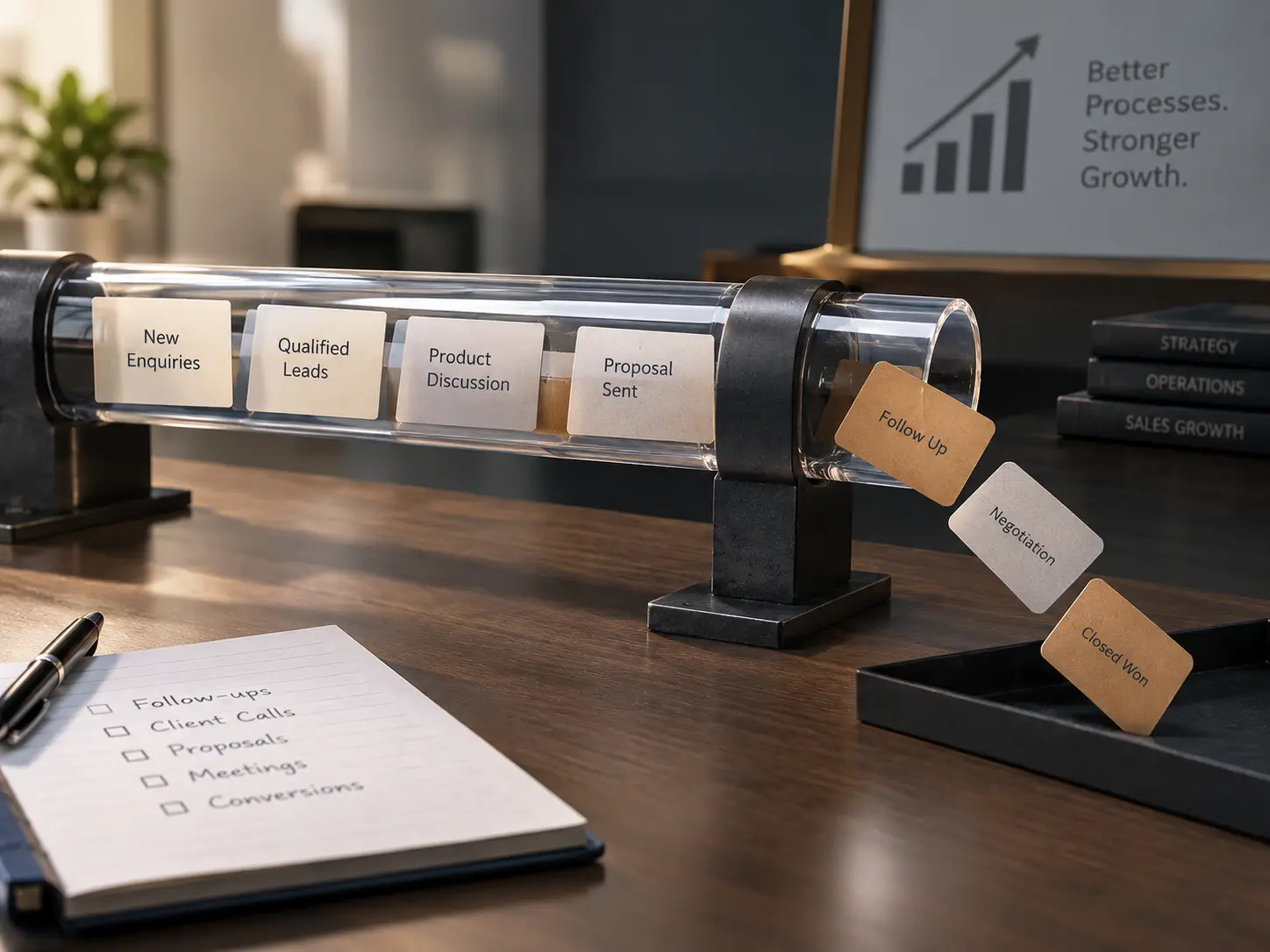
- Strategy is translated into weekly execution
- Teams are aligned around measurable outcomes
- Financial visibility supports decisions
- Operations and sales move together
Without implementation discipline, even the best FMCG business growth strategies remain presentations.
The Emotional Side of Growth
Let’s acknowledge something rarely said openly.
Growth fatigue is real.
When every year feels like pushing harder without breathing easier, founders start losing joy.
You built the business for freedom.
Not constant tension. And that’s why so many founders quietly ask: “Why does growth feel harder now than when we were smaller?”
Because complexity increased. But the structure didn’t.
The Shift That Changes the Game
The FMCG SMEs that truly scale don’t focus only on revenue growth.
They focus on:
- Margin clarity
- Operational discipline
- Cash visibility
- Team accountability
- Strategic focus
When these foundations are strong, growth stops feeling chaotic, and many founders achieve this clarity by working with a structured business consulting firm.
And that’s when scale becomes sustainable.
A Small Hint
If you’re experiencing growth pressure instead of growth confidence, the issue may not be effort.
It may be alignment between strategy and execution.
Sometimes what changes everything is not a new idea but a structured way to implement the right ones.
That’s where strategic implementation frameworks quietly create momentum without noise.
Final Thought
FMCG growth is not about moving faster.
It’s about moving stronger.
The challenges faced by FMCG SMEs are real, thin margins, heavy competition, operational complexity, and working capital stress.
But the businesses that win aren’t the loudest. They’re the most disciplined.
Because in FMCG, growth doesn’t reward chaos. It rewards clarity.