


Crossing ₹10 crore in revenue is a milestone many founders celebrate. It validates the product, the market, and the years of effort invested. Yet, quietly and often unexpectedly, this milestone also marks the beginning of a far more complex phase of business growth.
The journey from ₹10 crore to ₹50 crore is not a linear extension of what worked earlier. It demands a fundamentally different business growth strategy—one that replaces hustle with systems, intuition with data, and founder-centric decision-making with organizational capability.
Across Indian mid-sized businesses, a consistent pattern emerges: companies don’t stall at this stage due to lack of opportunity, but because internal structures fail to keep pace with growth.
Why the ₹10–₹50 Crore Phase Is Structurally Different
At ₹10 crore, most businesses still operate with informal systems. Founders remain deeply involved in sales closures, vendor negotiations, hiring decisions, and problem-solving across functions. While this hands-on approach enables early momentum, it becomes unsustainable as complexity increases.
What changes at this stage is not ambition but organizational load.
Orders increase, teams grow, customers diversify, and decision cycles multiply. Without deliberate redesign, the same systems that once enabled speed begin to create friction.
Research on mid-market growth shows that companies entering this phase face three recurring challenges:
- Decision-making slows as approvals remain centralized
- Execution quality varies across teams and locations
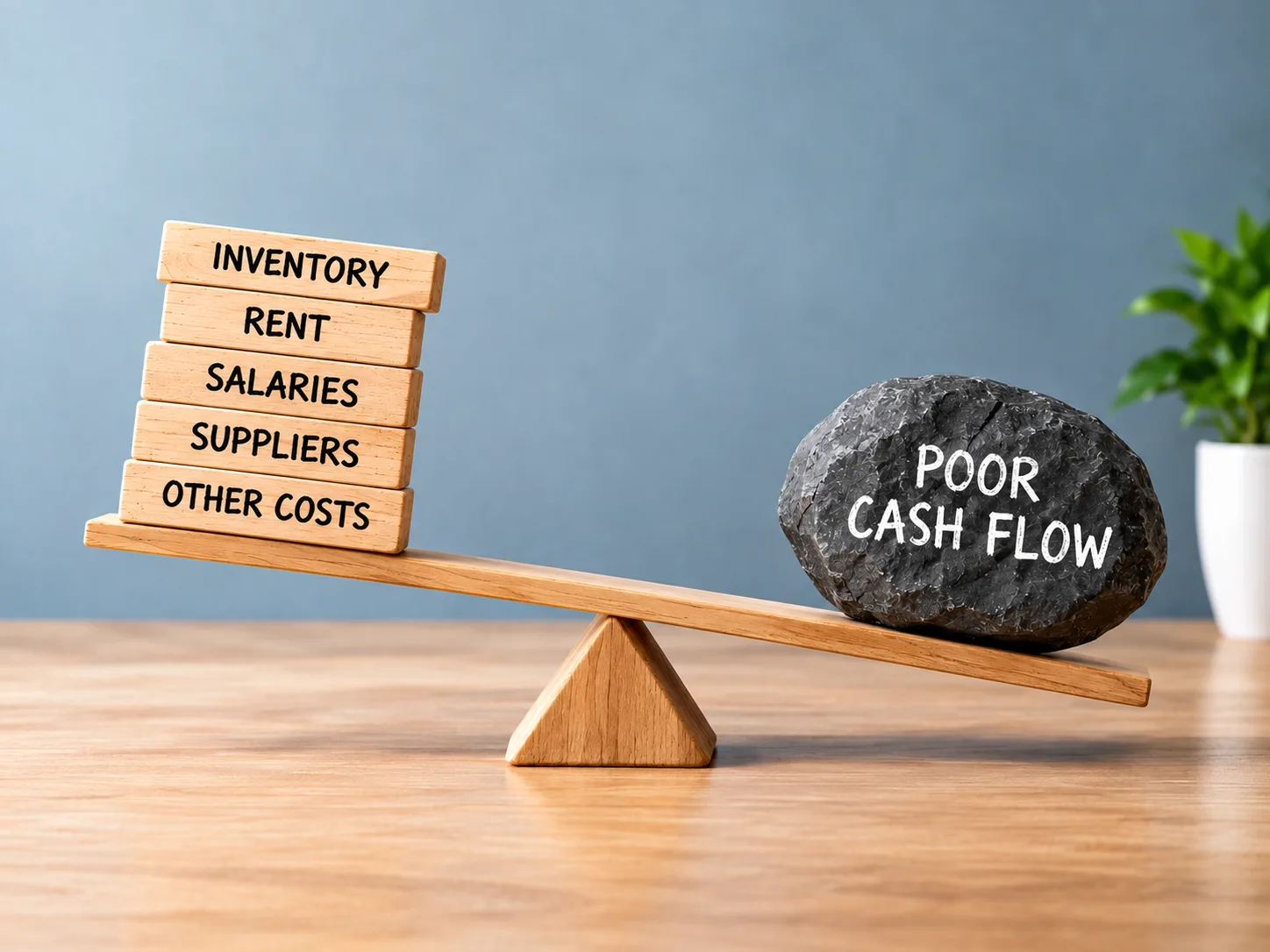
- Revenue grows, but profitability and cash predictability lag
This is where strategy must shift from doing more to designing better.
The Five Pillars of a Scalable Business Growth Strategy
Sustainable growth from ₹10 crore to ₹50 crore rests on five interdependent pillars. Ignoring even one creates an imbalance that eventually constrains scale.
1. People & Leadership: Moving Beyond Founder Dependency
In early stages, founders are the glue holding everything together. At scale, this becomes the bottleneck.
At this stage, many founders benefit from engaging a business consultancy to design leadership structures, financial systems, and sales processes that enable predictable growth.
Businesses that grow successfully invest early in leadership bandwidth. This means clarifying decision rights, empowering mid-level managers, and building accountability that does not require constant founder intervention.
Well-designed leadership structures allow:
- Faster decision-making at the frontlines
- Reduced dependency on a few individuals
- Clear ownership of outcomes, not just tasks
Studies in organizational performance consistently show that distributed leadership improves execution speed and reduces burnout at the top.
2. Money Management: Turning Revenue into Control
Revenue growth without financial visibility often masks underlying risk.
At the ₹10–₹50 crore stage, businesses must move beyond basic accounting toward financial foresight. This includes rolling cash-flow forecasts, margin-level clarity, and scenario planning for expansion decisions.
Companies that introduce disciplined financial management at this stage benefit from:
- Improved cash predictability
- Stronger pricing decisions based on real cost structures
- Faster, more confident investment decisions
In practice, many businesses unlock significant profitability not by selling more but by understanding where money is actually made or lost.
3. Customers & Sales: From Effort-Based to Predictable Revenue
Founder-led sales works until it doesn’t.
As volumes increase, informal sales processes lead to inconsistent pipelines, unreliable forecasting, and uneven performance across teams. Businesses that scale successfully invest in structured sales systems that prioritize clarity over heroics.
Effective sales engines focus on:
- Clear ideal customer profiles
- Transparent pipeline visibility
- Measurable conversion metrics
- Consistent review rhythms
Global sales performance studies indicate that companies with structured pipeline management achieve significantly higher forecast accuracy and conversion rates than those relying on intuition alone.
4. Operations & Quality: Preventing Growth-Induced Chaos
Growth magnifies inefficiencies.
Without standardized processes, increased demand leads to delays, rework, and customer dissatisfaction. Strong operational design ensures that quality improves as scale increases, not deteriorates.
Operational maturity at this stage involves:
- SOP-led execution across teams
- Capacity planning aligned to demand
- Quality embedded into workflows, not inspected later
- Faster turnaround times without compromising reliability
Manufacturing and services businesses alike report measurable cost reductions once operational leakages are addressed systematically.
5. Growth & Planning: Shifting from Reactive to Intentional Scale
Many companies grow reactively, responding to opportunities as they arise. While this works early, it becomes risky at scale.
Intentional growth planning helps businesses prioritize markets, sequence expansion, and allocate resources without overstretching teams or capital.
This includes:
- Segment and market prioritization
- Expansion readiness assessments
- Quarterly and annual growth roadmaps
- Clear milestones tied to capacity and capability
Planned growth consistently outperforms opportunistic growth, especially in volatile markets.
Why Scaling Requires Design, Not Just Ambition
A critical insight from growth research is this: companies don’t fail to scale because they lack ideas; they fail because they lack systems.
As complexity increases, effort alone stops working. Growth must be engineered through structure, data, and disciplined execution.
This is why many businesses that reach ₹10 crore stall for years while others accelerate rapidly toward ₹50 crore. The difference lies not in motivation but in strategic design.
The Broader Growth Continuum
The challenges faced between ₹10 and ₹50 crore are fundamentally different from those faced beyond ₹50 crore.
As organizations grow further, complexity shifts from execution issues to coordination, governance, and multi-layered decision-making. Recognizing this continuum early allows leaders to prepare proactively rather than react under pressure.
Businesses that invest in structured growth frameworks during the ₹10–₹50 crore phase are significantly better positioned to handle the next leap, where scale introduces organizational complexity rather than operational strain.
Conclusion: Scaling Is a Structural Journey
Reaching ₹10 crore proves that a business works. Reaching ₹50 crore proves that it can work without constant firefighting.
The transition requires:
- Leadership that scales beyond individuals
- Financial systems that create visibility and confidence
- Sales engines that deliver predictability
- Operations that improve with volume
- Growth plans grounded in reality, not optimism
This phase is less about pushing harder and more about building smarter.
For founders and leadership teams navigating this transition, the most successful path forward is one grounded in clarity, discipline, and intentional design because sustainable growth is never accidental.